
Neonatal Ventilator Support Facility
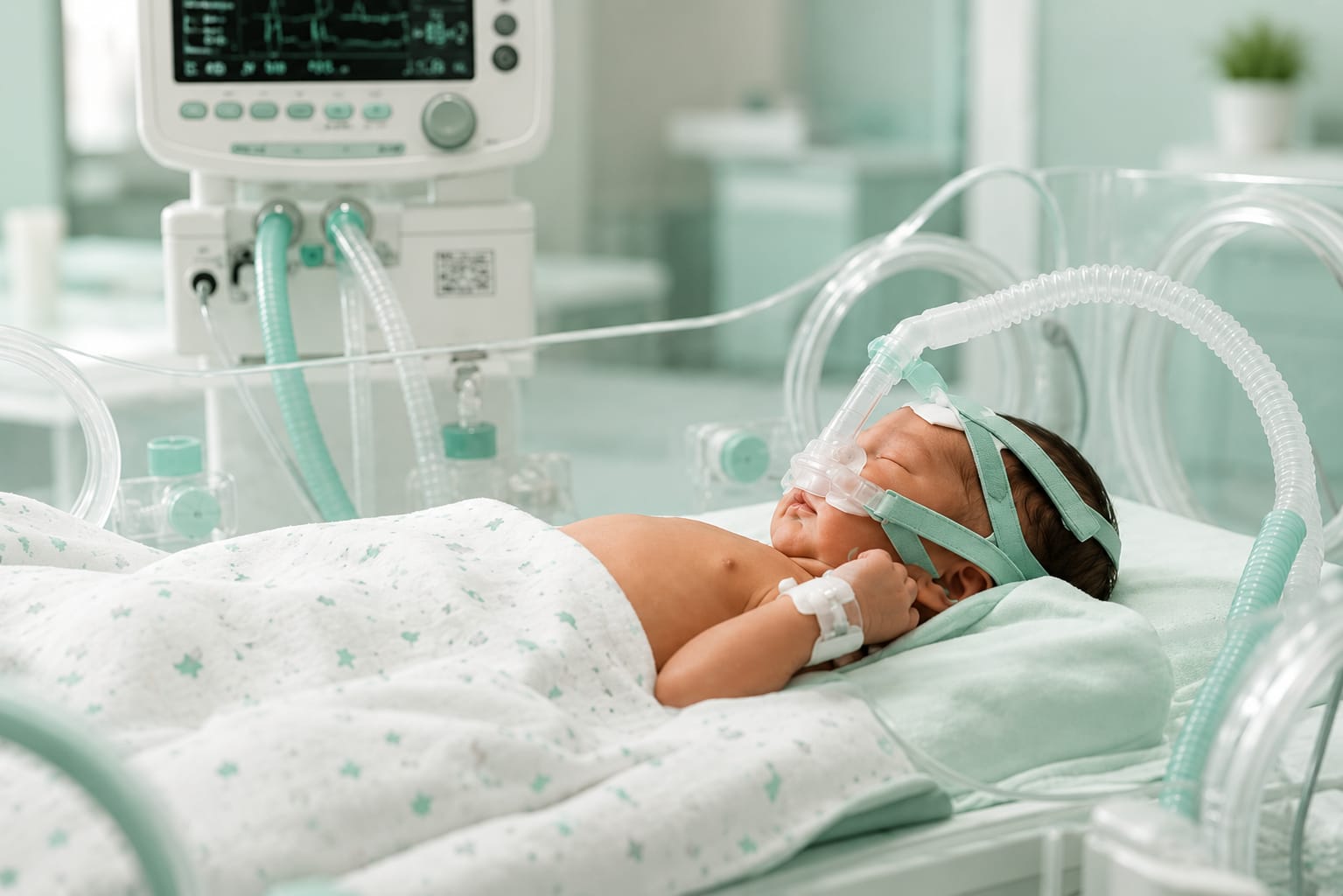
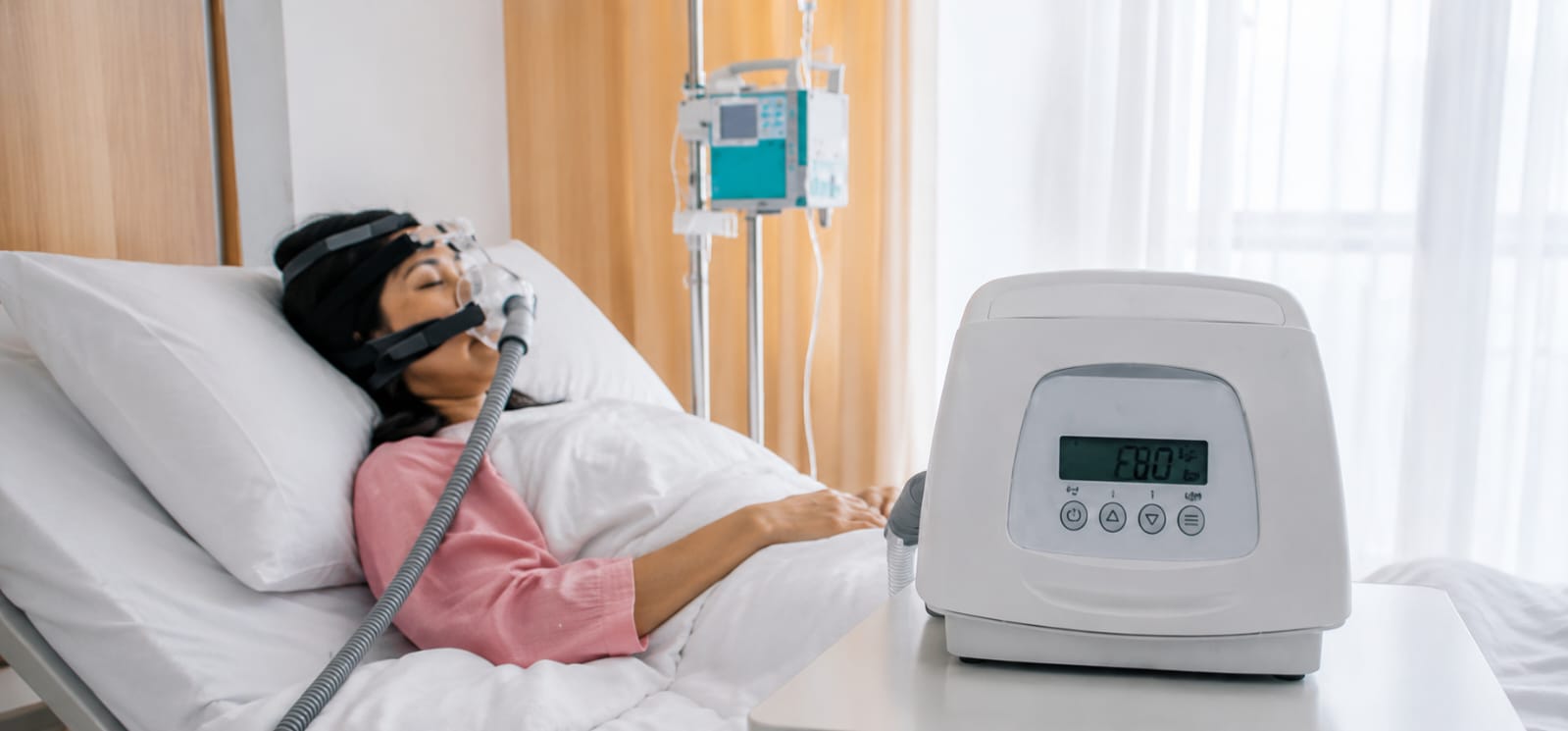
CPAP (Continuous Positive Airway Pressure) is a non-invasive ventilator support used for sick neonates who have breathing difficulties. It helps keep the baby’s lungs open by providing steady air pressure, improving oxygen levels without the need for invasive ventilation. This facility is especially useful for premature babies and newborns with respiratory distress, ensuring safer and gentle breathing support in the neonatal care unit.
About the Speciality
The Neonatal Respiratory Care Unit is a highly specialized facility dedicated to supporting newborns who face breathing difficulties immediately after birth. It is especially essential for premature babies whose lungs are not fully developed.
Continuous Positive Airway Pressure (CPAP) therapy is one of the key non-invasive treatments used in this unit. It provides gentle, steady airflow with oxygen support to keep the baby’s airways open and improve breathing without invasive procedures.
In critical cases, advanced neonatal ventilator systems are used to deliver controlled and precise respiratory support. These life-saving machines help regulate oxygen levels and breathing patterns for newborns with severe respiratory distress.
With 24/7 monitoring by experienced neonatologists and NICU-trained staff, the unit ensures continuous, safe, and compassionate care. This advanced support significantly improves survival rates and promotes healthy lung development in vulnerable infants.

Neonatal Respiratory Care Unit
Advanced Breathing Support for Newborns
NICU Specialized Life-Saving Care
CPAP Non-Invasive Support
Advanced Neonatal Ventilators
24/7 NICU Monitoring
Expert Neonatology Team
Conditions We Care For
Respiratory Distress Syndrome (RDS)
A common condition in premature babies where lungs are not fully developed.
CPAP and ventilator support help improve breathing and oxygen levels.
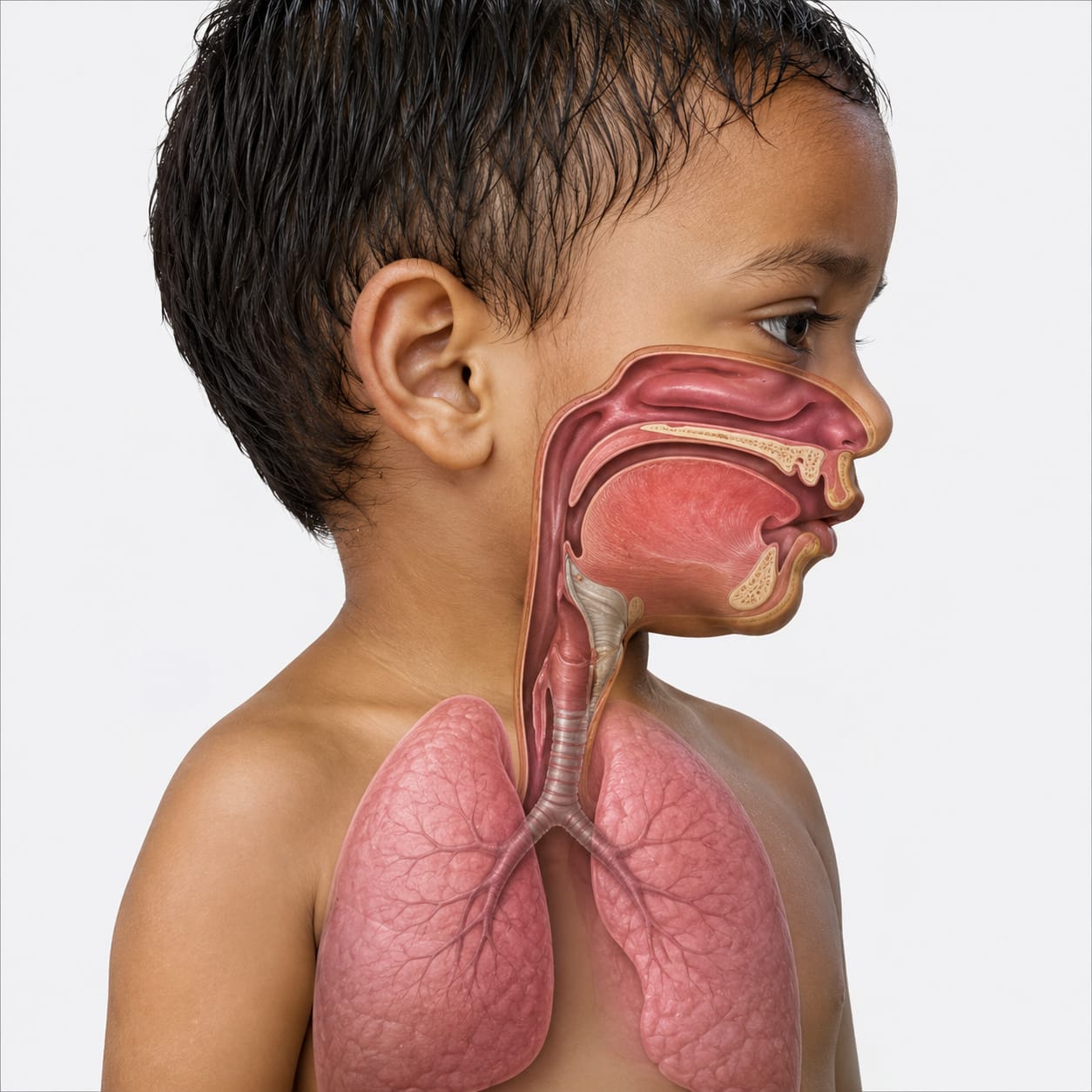
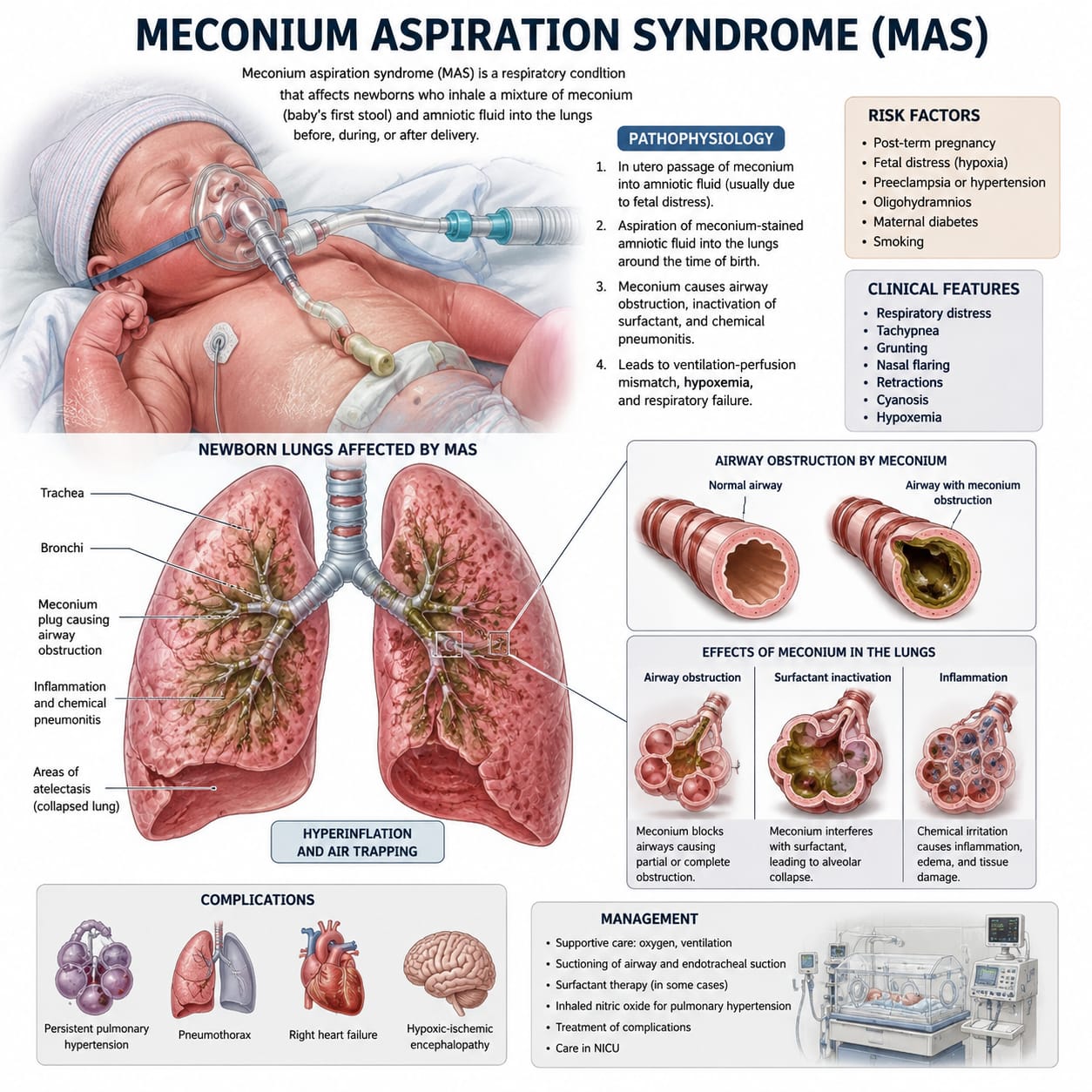
Meconium Aspiration Syndrome
Occurs when a newborn inhales meconium-stained amniotic fluid during birth.
It causes breathing difficulty and requires immediate respiratory support.
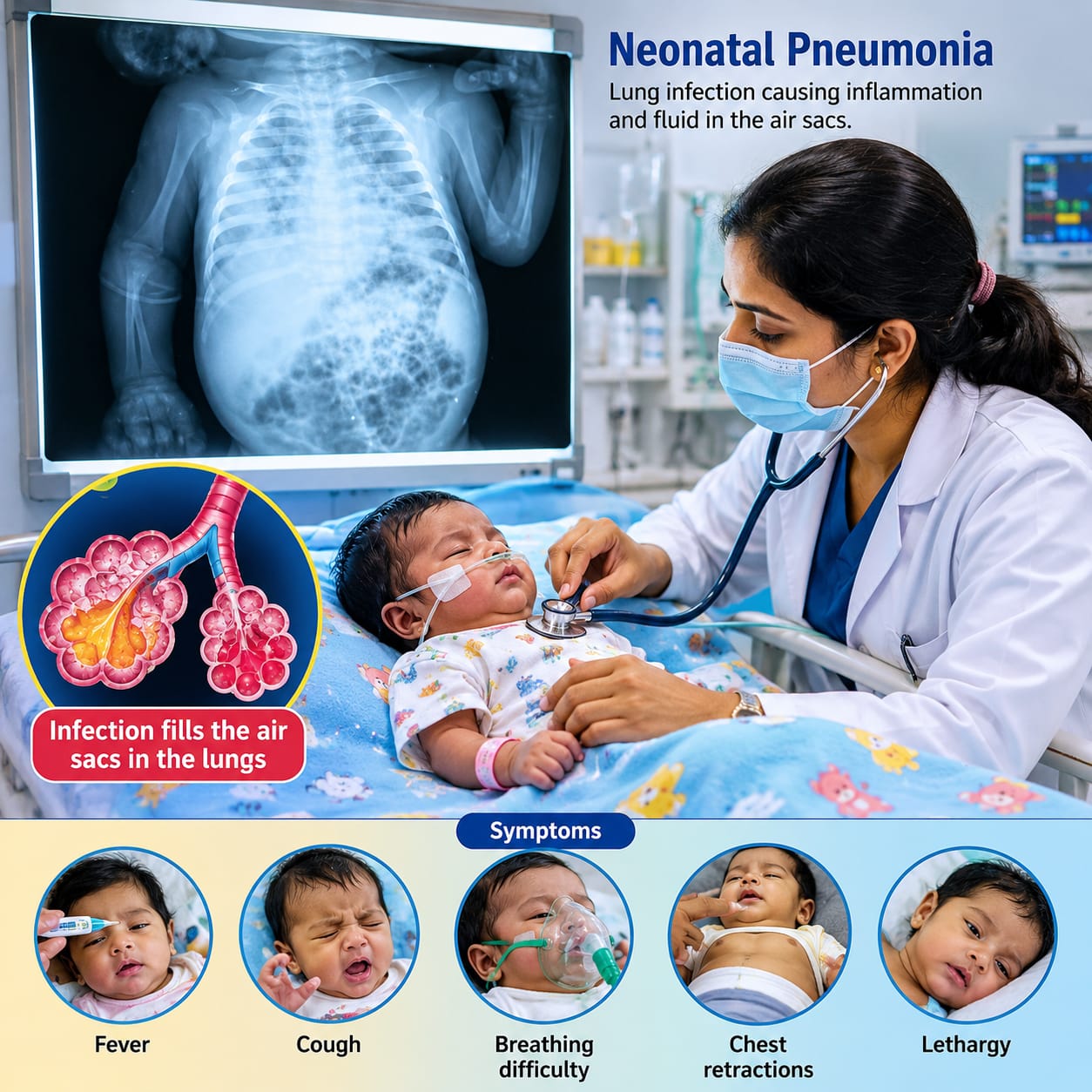
Neonatal Pneumonia
A lung infection seen in newborns leading to rapid breathing and distress.
Treated with antibiotics and ventilatory support when required.
Birth Asphyxia
Condition where the baby does not get enough oxygen during birth.
Immediate resuscitation and ventilator care are critical for survival.
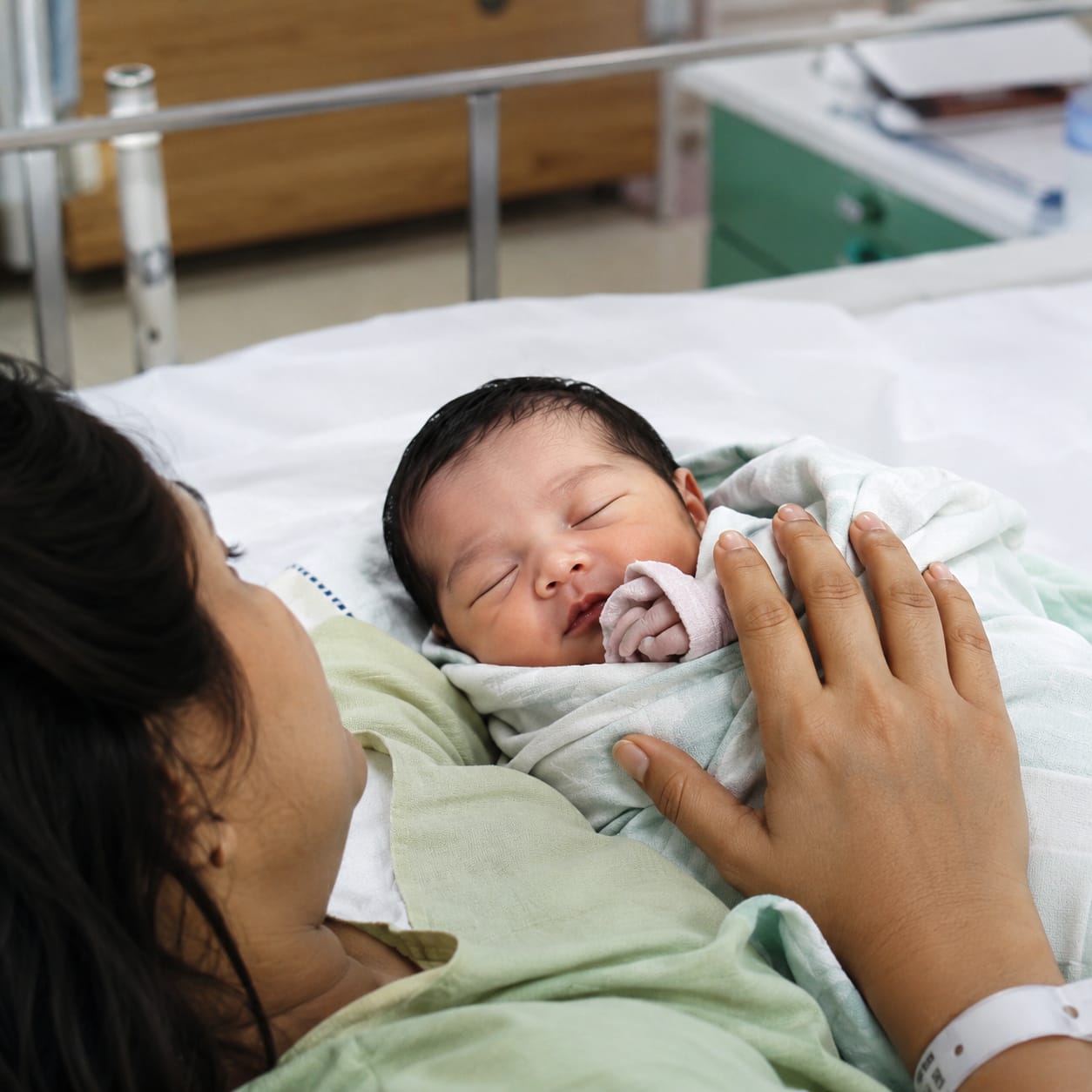
Prematurity-Related Breathing Problems
Premature babies often have weak and immature lungs.
CPAP helps maintain lung expansion and supports effective breathing.
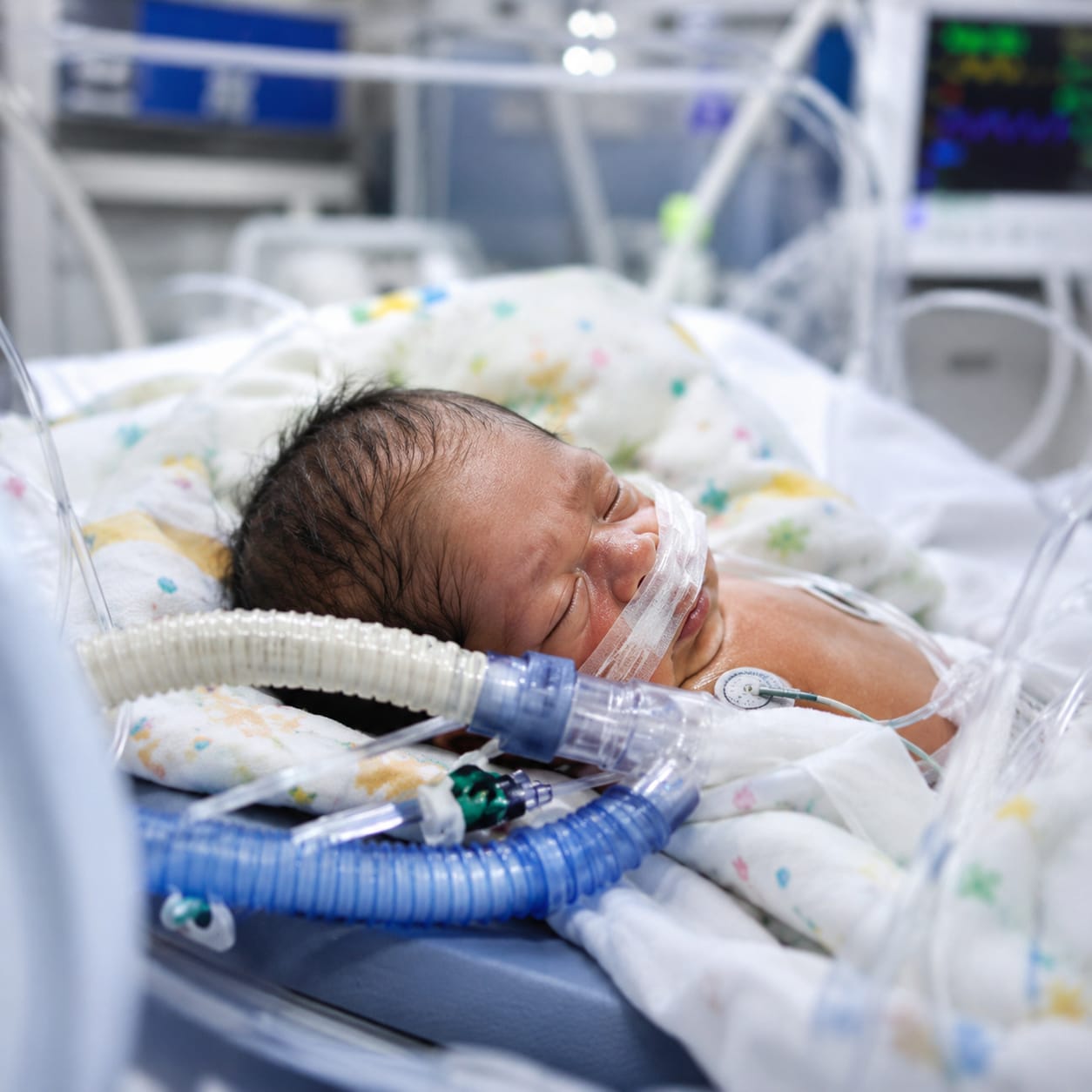
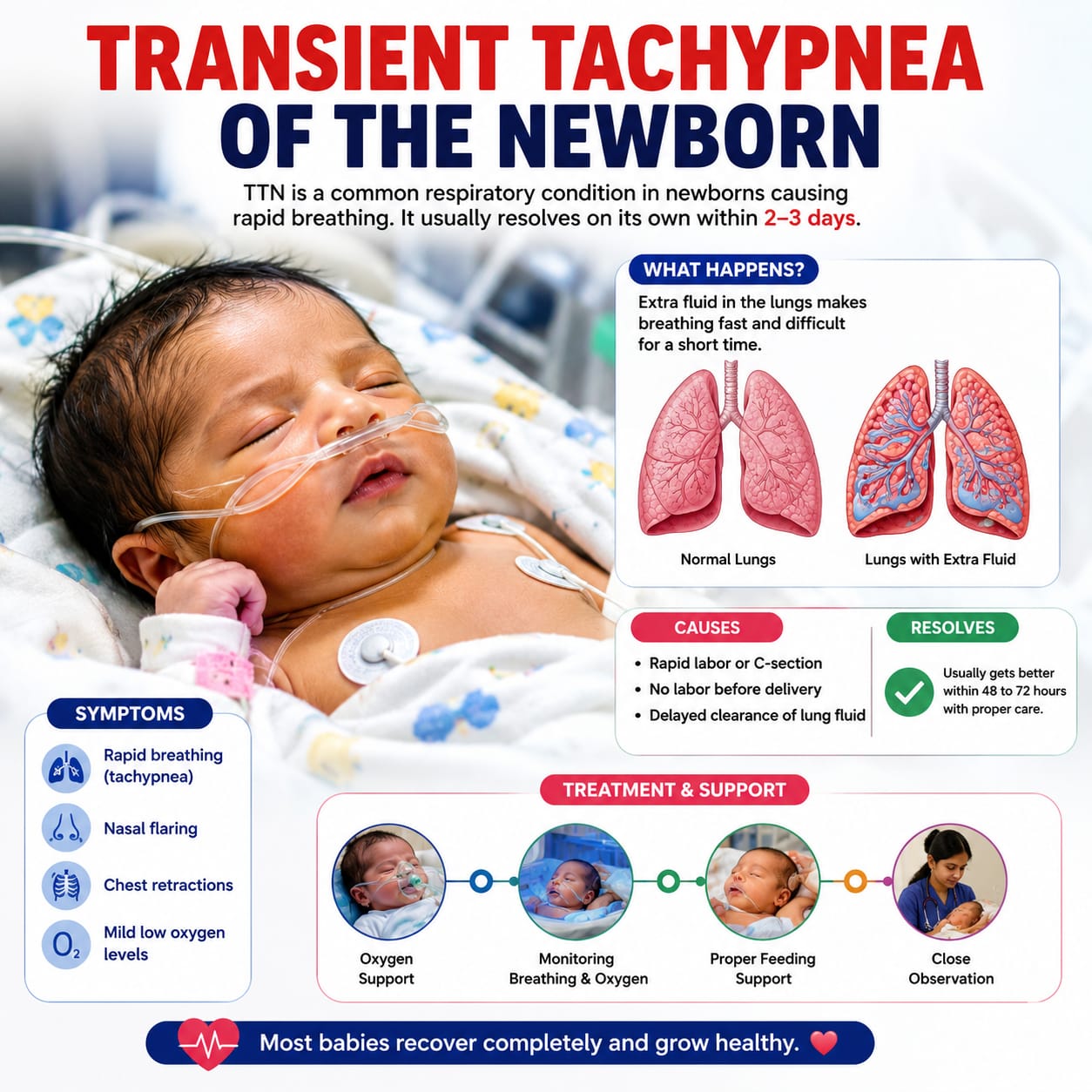
Transient Tachypnea of Newborn (TTN)
A temporary breathing difficulty due to retained lung fluid after birth.
Usually managed with oxygen support and close monitoring.
CPAP Support
CPAP support helps newborns who have difficulty breathing independently. A soft nasal interface is gently placed to deliver continuous air pressure. This pressure helps keep the baby's tiny airways and lungs open. The neonatology team carefully assesses the baby's breathing pattern before starting support. Oxygen levels, heart rate, and respiratory effort are continuously monitored. CPAP pressure is adjusted according to the baby's clinical condition. The care team regularly checks the nose and surrounding skin for comfort. Nurses ensure the device remains correctly positioned. Feeding and hydration needs are managed based on the baby's condition. Blood oxygen levels are closely observed throughout treatment. Additional investigations may be performed when required. Parents are informed about the baby's progress and respiratory support. As breathing improves, CPAP pressure is gradually reduced. The baby is carefully observed during the weaning process. CPAP support is stopped when the baby can maintain stable breathing safely.