
Introduction
The Centralized Oxygen System is one of the most important life-support infrastructures in modern hospitals, especially in critical care environments where every second decides the outcome of a patient’s life. In emergencies such as breathing failure, cardiac arrest, trauma cases, or severe infections, oxygen is the first and most urgent requirement. At Sushillpi Speciality Hospital, this system ensures that oxygen reaches the patient instantly without any delay, making treatment faster and more efficient.
Unlike traditional oxygen cylinders that require replacement, manual handling, and monitoring, this advanced system delivers continuous oxygen directly to every patient bed. The Centralized Oxygen System eliminates delays and ensures doctors can focus completely on treatment instead of oxygen management.
What Makes Centralized Oxygen System So Important in Hospitals?
Modern healthcare depends heavily on speed and precision. In ICU and emergency wards, patients often require immediate oxygen support the moment they arrive. The Centralized Oxygen System is designed to solve this exact challenge.
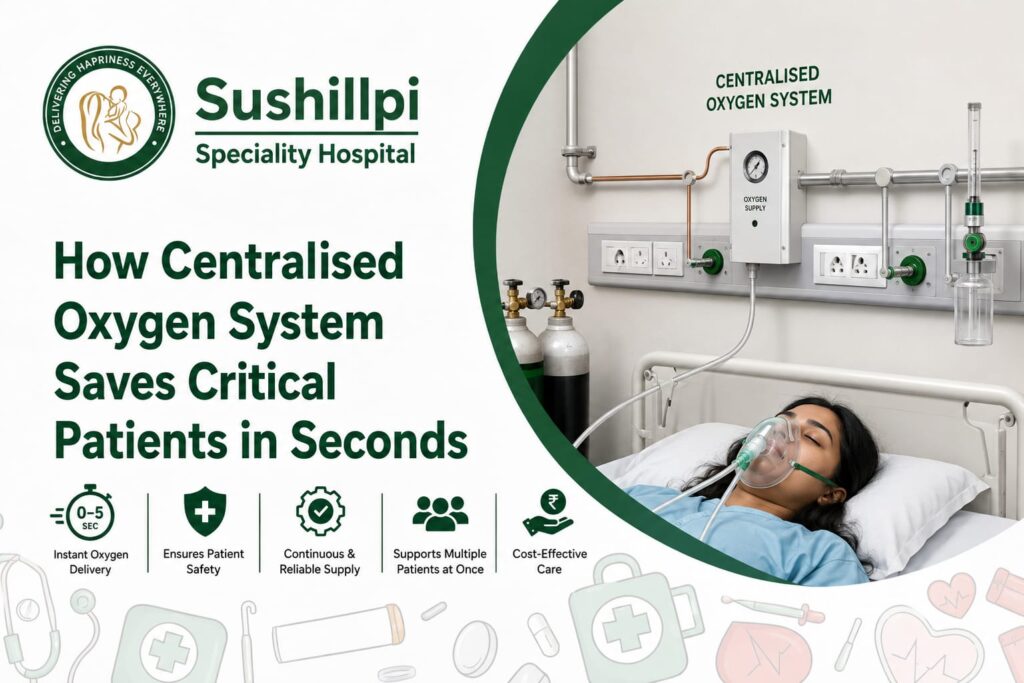
This system uses a central oxygen storage plant connected through a pipeline network that reaches every corner of the hospital. Whether it is ICU beds, operation theaters, or emergency rooms, oxygen is always available at the bedside.
At Sushillpi Speciality Hospital, this setup ensures that the Centralized Oxygen System is always active, monitored, and ready to respond in seconds. There is no need for manual intervention during emergencies, which significantly reduces risk and improves survival chances.
How It Works During Emergency Situations
During a medical emergency, time is extremely critical. When a patient arrives with severe breathing difficulty, doctors immediately connect oxygen support through wall outlets. This is where the Centralized Oxygen System plays a life-saving role.
Instead of searching for cylinders or waiting for replacements, oxygen flows instantly from the central plant to the patient’s mask or ventilator. This immediate response can stabilize the patient within seconds.
In ICU situations, multiple patients may need oxygen at the same time. The Centralized Oxygen System ensures uninterrupted supply to all beds simultaneously without pressure drop or delay, making it highly reliable for critical care units.
Benefits of Centralized Oxygen System in Critical Care
The advantages of this system go beyond convenience. It directly impacts patient survival and hospital efficiency.
The Centralized Oxygen System ensures:
- Instant oxygen availability at every patient bed
- Continuous supply without interruption
- No dependency on manual cylinder replacement
- Reduced risk of oxygen shortage in emergencies
- Faster response time in ICU and emergency wards
At Sushillpi Speciality Hospital, this system supports doctors and nurses by removing unnecessary delays, allowing them to focus fully on saving lives.
Role in ICU, Emergency Room, and Operation Theater
Critical care areas depend heavily on oxygen availability. In ICUs, patients often remain on oxygen support for long periods. The Centralized Oxygen System ensures stable and controlled oxygen delivery throughout their treatment.
In emergency rooms, where trauma and accident cases arrive suddenly, immediate oxygen support is crucial. This system ensures that treatment begins within seconds of admission.
Even in operation theaters, anesthesiologists rely on the Centralized Oxygen System to maintain patient stability during surgeries. The uninterrupted supply ensures safe and smooth surgical procedures.
Safety, Monitoring, and Reliability
Hospitals must guarantee 100% reliability when it comes to oxygen supply. The Centralized Oxygen System is built with advanced monitoring tools, pressure control mechanisms, and backup systems.
Even during peak usage or emergency overload situations, the system maintains stable oxygen pressure. Regular monitoring ensures that any issue is detected early and corrected immediately.
At Sushillpi Speciality Hospital, strict maintenance protocols ensure that the Centralized Oxygen System performs efficiently at all times without failure.
Why It Saves Lives in Seconds
The biggest advantage of the system is speed. In life-threatening conditions, even a delay of a few seconds can worsen a patient’s condition.
Because of the Centralized Oxygen System, oxygen is available instantly at the bedside. There is no waiting time, no setup delay, and no manual handling required. This instant response is what makes it a true life-saving technology in modern healthcare.
Conclusion
The Centralized Oxygen System is not just medical infrastructure—it is a critical life-saving backbone of modern hospitals. At Sushillpi Speciality Hospital, this system ensures that patients receive oxygen instantly without delay, especially during emergencies where every second matters. With advanced technology, continuous monitoring, and hospital-wide coverage, it plays a major role in saving lives and improving critical care outcomes.